

How to Develop Creative Resilience
Keep writing even when writing is hard.

Welcome to Magic & Ink. I’m Stace, and I write about fantasy writing, creative living, and magic. This post got a little long. If you want to get to the meat of the subject, skip down to the pointing hand below!
One of the things that I know for sure is that, as a writer, one of the best ways for me to get through challenging times is to write. The great paradox is that it is exactly those times that writing can be the most challenging. How am I supposed to write about imaginary worlds and magical beings when the world is falling apart, both personally and globally?
I have been thinking a lot about how I have gotten through the challenges of the last year and still be in a place, emotionally and spiritually, where I can keep writing.
It wasn’t always this way. When I lost my job in 2009, it was the height of the Great Recession, and I spent years un- and underemployed, barely eking out a living while constantly on the hunt for a good job.
At first, all that free time was great.1 I wrote a novel draft, played in my art journals daily, and explored the world of contemplative photography — I even taught a few workshops on those subjects. One of my photos won an honorable mention at the county fair.
But I wasn’t making a living, and in 2011, the emotional toll of constantly being ignored and rejected by employers struck hard: I suffered a major creative crash. I can pin it almost exactly to the day, because I was in the midst of a 365 photo-a-day challenge and it just stopped. No more photos. No more art journals. No more writing.
There are some blog posts lingering from that time that talk about my creative blockage, trying to sort out my frustrations, but even blogging slid away from me. Except for what I had to produce to earn the meager paychecks I was bringing home, words became a stranger to me.
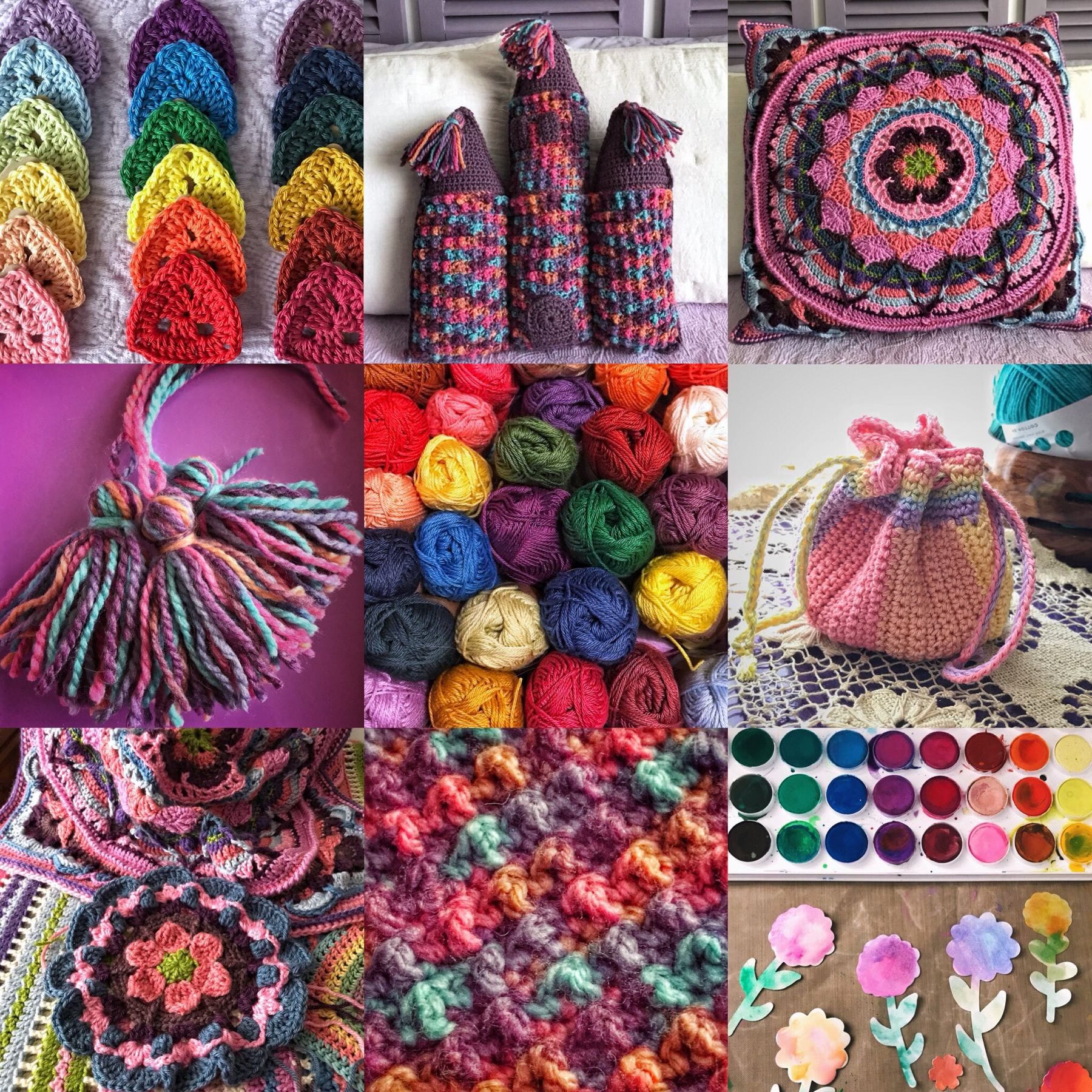
My situation improved slowly. In 2015 I finally got another solid job that was emotionally fulfilling. The urge to create something — anything — returned with an urgent trip to the craft store and two colorful skeins of yarn that launched a years-long obsession with crochet, a hobby I hadn’t picked up regularly for more than 20 years. But I was making things by hand, and each stitch was forging a chain that hauled my creativity out of the depths of despair.
But it took another three years before I was really excited about writing again.
I remember having conversations with myself, while I was filling my Instagram with photos of brightly colored crocheted objects, that maybe this was ok. Maybe the identity of writer, the dream of publishing my own novels and stories, was something I could let go of. I was still making things that made me feel good, right? Maybe that was enough.
Obviously, the answer was no! I still remember that moment, too, the book I was reading that caused my belly to flutter in a way that wasn’t just “I wonder what happens next” but “I want to write something that makes people feel this way, too.” What a wonder that was, a creative restoration that was at the same time a spiritual renewal. Even though it would take more years of practice and relearning before I was writing anything I’d consider good, I was again what I had always longed to be in my heart, a writer.
This bit of personal history has gone on a lot longer than I imagined, but I want to impress upon you that I genuinely, fundamentally understand the importance of creative resilience.

When you identify as a writer or a painter or a composer or any other sort of person that demands you to reach into your soul on a regular basis and create something new, the world is going to consistently throw you opportunities to stop doing that. Because creative work is hard and the subconscious is willing to grab any excuse to not do the hard work.
Creative resilience, though, is how we keep ourselves coming back to do the hard work no matter how much the world/our subconscious wants us to stop. I didn’t have it, back in 2011. At least not the kind of resilience that is sustainable through extended trials.
Recently, my life has gone through even more challenge and upset than I faced fifteen years ago, and without the safety net I had back then. But in 2026, I am not worried about my creative resilience failing me. Part of that is just being older and wiser, naturally — you really do get better at coping with shit when it happens.
But I’ve also made a deliberate effort in the past few years to develop practices that nurture creative resilience. Even when life is making it hard to actually sit down and write, I never want to reach the point where I don’t feel like a writer ever again. These practices are my (not so) secret weapons for ensuring that.
Morning pages.
If you’ve never heard of morning pages, then check out Julia Cameron’s book The Artists Way, or search YouTube for any of the thousands of videos that discusses how morning pages work. It is, essentially, three pages of daily writing, usually done first thing in the morning. It is not planning. It’s not composition. It’s or a diary or even journaling, really. It isn’t meant to be read or reflected on. It is a brain dump that is not about what comes out so much as it is about the actual motion of writing, which is why every morning pages guide you read will insist on writing on paper with a pen or pencil. Everything else — the size of the paper, whether you have a cup of tea while you do it, even the time of day you write — is negotiable, but writing by hand is not.
I started writing “morning pages” in the evenings after work a few years ago, as part of a deliberate effort to develop a deeper relationship with my writing — to make writing a more intrinsic part of my daily routine, and not something I had to task myself to accomplish. And thank goodness! By the time I was caring for my mother in hospice last year, writing daily had become as much a habit as brushing my teeth is. I didn’t have to think about it to do it. I don’t remember very much about the entire month of June, but I know I wrote three pages every day.
The value of this is that the connection forged between mind and body and page was never choked off, even when I was incapable of any higher forms of creative effort. It’s like turning on the faucet when you are expecting a freeze — it keeps the pipes clear.. Once life began to return to normal, I was able to resume more purposeful writing without having to chip away any accumulated blocks. Even now, when there’s too much going on to work on my novel, I can still take comfort from writing every day, at least a little.
Meditation.
I know why people resist meditation. When you observe someone meditating, you see someone who appears still and calm and at ease; but when you try it yourself, you feel anything but peaceful. Physical stillness is hard enough, but mental stillness? Impossible!
But the good news is that most of the people you see meditating are not as still in their heads as you might imagine. The goal of meditation is not to actually turn off your thoughts, but simply be present in the moment, in your body, as an observer of the thoughts that come into your brain. Not figuring things out, not judging, not being critical of yourself or others: just observing. That ideal stillness might occur eventually, occasionally, but the the real goal is the practice itself — the effort, the trying.
Like morning pages, meditation is a practice I started regularly a couple of years ago. It’s not onerous;I typically do 10 or 20 minutes, relying on guided meditations from YouTube that walk me through some kind of breathing and visualization routine, depending on if I need to relax or I need to energize and uplift myself. It’s not a test or a trial, so I make it as easy on myself as possible. Focusing on my breathing, relaxing my body, becoming aware of where tension is lingering, both physically and mentally, making space to center and ground myself for at least a few minutes before the world intrudes each day — all this helps me better able to cope with whatever is going to happen.
Walking
Like mediation, walking helps me remember that I am a whole person in the world, not just a brain. Writing (especially on a keyboard) is a largely immobile and very mental way to spend your days. Getting up and moving around regularly is essential, but even when I take breaks to make tea or use the bathroom, my attention can still be occupied with whatever I’ve been working on.
Taking a walk outside is different. Not only does it get my body moving, it redirects my attention from the internal world to the external world. Nature is a pretty amazing thing, even in an urban or suburban landscape, and getting out and noticing it on a regular basis is vital to sustained well-being, whether you’re inspired to write poetry or not.
Currently, I’m compelled out the door at least three times a day because I live in an apartment with a dog, but even without that urging, I still try to make a walk a part of my daily routine — when I was stuck in a offie 8-5 each day, I had my walks scheduled on my calendar, giving me something to look forward to (especially as the job grew more intolerable each day).
That one friend.
If you don’t have a friend who is also a writer, then you don’t know what you’re missing. And I don’t necessarily mean a writing buddy, though that’s no bad thing to have either. I mean the friend who knows what you’re struggling with on the page as well as what you’re struggling with off the page, and who knows how these aspects of your life complement and afflict one another in dynamic ways. The friend who can tell you how to fix the info dump in chapter two while simultaneously sharing recipes, tarot readings and late-night cat pics.
I lucked into this kind of friend at the exact moment I was ready for it in my creative life, and she was, too, I think, as we have hauled each other back into the writing life word by word.2 I don’t have any advice for making a friend like this except that whenever you meet someone with potential, ask them out to a long lunch and just start talking. If it clicks, then nurture the hell out of it!
Make something every day.
The one thing that saved me from sliding into complete depression was doing something with my hands that was so far removed from writing that it didn’t make me feel worse about not writing. Crochet kept my hands busy, It made me feel productive because I was making something tangible and useful or fun. It didn’t even matter if anyone else liked it or not so long as I enjoyed making it. [Though to be sure once I got into the IG side of sharing my projects, the more likeablity started to matter to me, Social media ruins everything.]
But most importantly it tapped into what little creative energy was stored away deep down inside. Even if I was following someone else’s pattern, I got to make color and yarn choices. I got to bring something new into the world. And the thing about creative energy, just like love —the more you use, the more there is.
Ever since I realized how important crochet was to my creative recovery, “Make something every day” has been my motto. Even when I’m not involved in some big craft project these days, I always make time to do something visually creative in my planner — stickers and colored pens and stamps. It’s not much, but it taps a creative side other than the one I access regularly for writings, and helps me to feel balanced and energized. And I know that, if I ever feel unable to reach for a pen, my crochet hooks and yard are just within reach.
OK, I have gone on much longer about this topic than I ever intended, but I guess I had a lot to say on this topic that is so important to me. If you’ve read this far, I hope it offered something useful to you.
Creativity can be a very fragile thing, and it needs to be protected and nurtured if it’s going to remain vital. Think of how many kids have creativity stamped out of them before they even have a chance to develop creative resilience!
If you’ve made it this far and are still able to think of yourself as a writer or an artist or a creator of any kind, consider yourself lucky and work on developing your own wellspring of resilience, so that when life takes a turn — as it surely will — you won’t fall to creative blocks, depression, and despair.
I’d love to hear what ways you go about ensuring creative resilience for yourself. Please share in the comments, or hit reply to this email!

I was really lucky that I had a support system in my life and I didn’t have to worry about food and shelter for me and my kids. We didn’t live luxuriously, but we were comfortable. <3 Mom.
Thanks, Elise <3